
Filling vs. Crown: When Do You Need a Crown for Teeth After a Filling?
When decay damages a tooth or an old filling begins to fail, you may wonder whether you need another filling or a dental crown. While both treatments restore damaged teeth, the right option depends on how much healthy tooth structure remains and how strong the tooth is.
At Affinity Family Dental Muncie, we provide personalized restorative care to help protect your teeth and maintain a healthy, confident smile.
Filling vs. Crown: What’s the Difference?
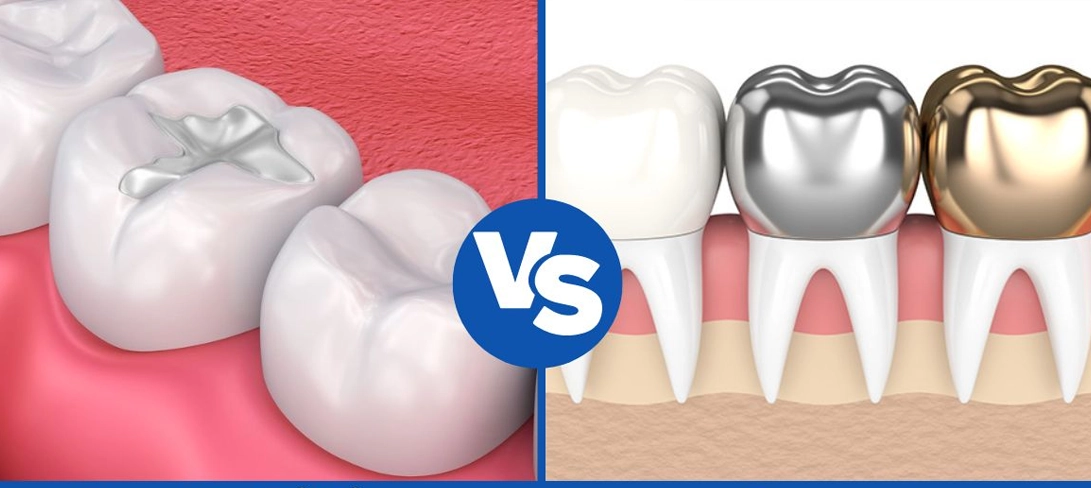
Dentists typically use a dental filling to repair a tooth with a small to moderate cavity or minor damage. It restores the affected area while preserving as much of the natural tooth as possible.
A dental crown, on the other hand, covers the entire visible portion of a damaged tooth. Dentists often recommend it when the tooth is significantly weak and needs extra protection.
When Is a Filling Enough?
A filling may be the right choice when:
The cavity or damaged area is relatively small
Most of the natural tooth structure is healthy
The tooth does not have significant cracks
The remaining tooth is strong enough to support the restoration
For many patients, a filling is an effective way to treat cavities and restore normal function.
When Do You Need a Crown After a Filling?
Your dentist may recommend a crown after a filling when the tooth has become too weak to support another filling. You may need a crown if:
The Filling Is Very Large
When decay affects a large portion of the tooth, there may not be enough healthy structure left to support a filling. A crown can provide additional coverage and protection.
The Tooth Has a Crack or Break
A cracked or weakened tooth may be more likely to break under normal chewing pressure. A crown can help protect the remaining tooth structure and restore its function.
An Old Filling Has Failed
Over time, fillings can crack, wear down, or develop gaps. If the tooth has suffered additional damage or decay around the old filling, replacing it with another filling may not always be the best option.
The Tooth Has Had Extensive Treatment
Teeth with multiple large fillings or extensive dental treatment may become weaker over time. Depending on the condition of the tooth, a crown may provide better long-term protection.
Filling vs. Crown: Which Is Right for You?
A filling may be best when the damage is small and the tooth remains strong.
A crown may be best when you have lost a significant portion of the tooth, the tooth is cracked or weakened, or there is not enough healthy structure left to support a filling.
Your dentist will evaluate the condition of your tooth and recommend the treatment that best supports your oral health and long-term needs.
Do You Need a Crown After a Filling?
In many cases, a filling is enough. However, if a tooth has a large or failing filling, a crown after a filling can protect it from cracking. Learn more about crowns and fillings at Affinity Family Dental Muncie, or read the American Dental Association’s guide to crowns.
Protect Your Smile at Affinity Family Dental Muncie
If you have a damaged filling, tooth pain, sensitivity, or a cracked tooth, don’t wait for the problem to become more serious.
At Affinity Family Dental Muncie, our team can evaluate your tooth and help determine whether a filling, crown, or another restorative treatment is right for you.
Schedule your dental appointment today and let us help restore and protect your smile.