
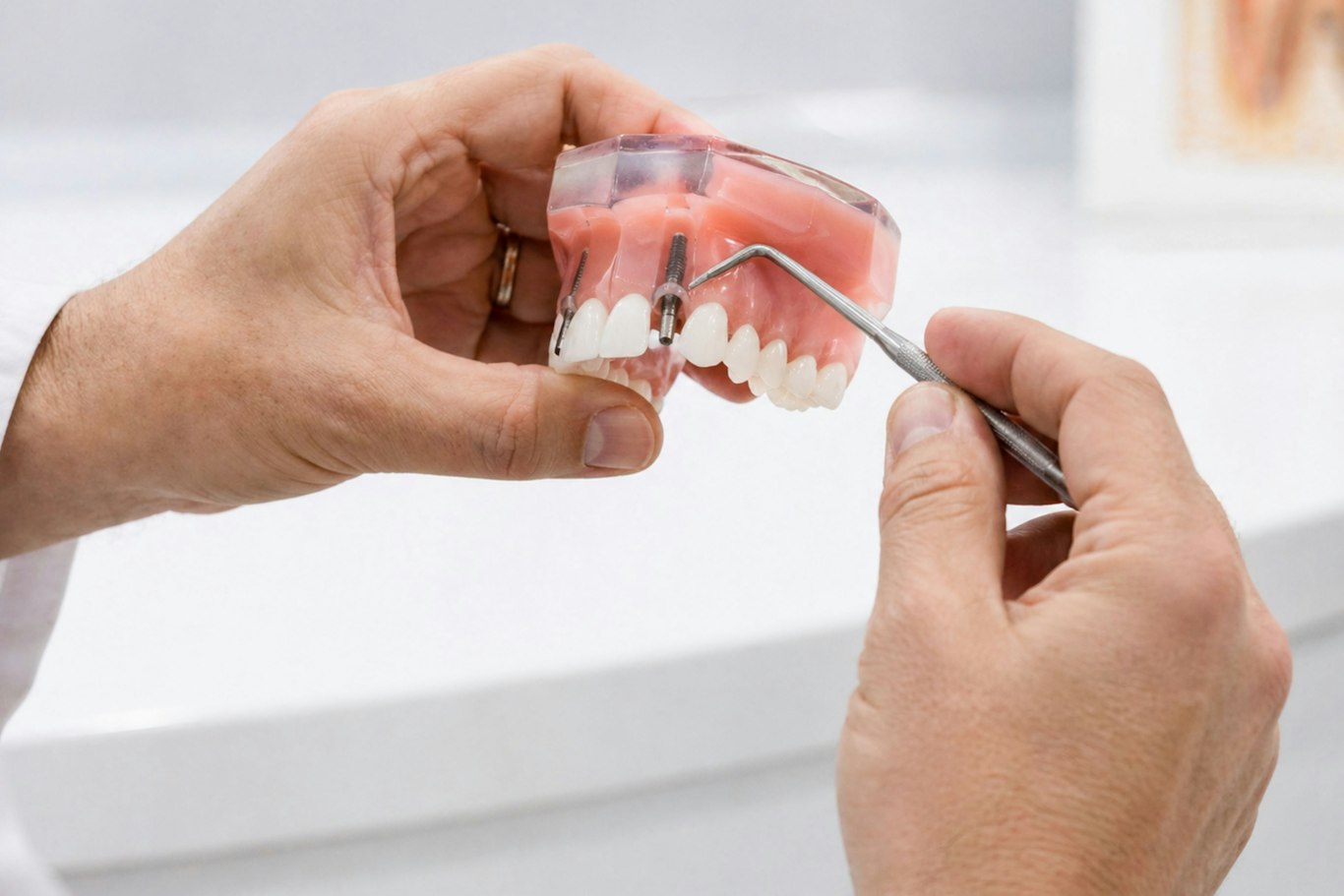
Dentures vs. Dental Implants: Pros, Cons and How to Choose
Missing teeth affect more than your smile. They can make it harder to chew and speak, cause nearby teeth to shift, and lead to bone loss in the jaw over time. If you are missing one or more teeth, you have probably wondered about dentures vs dental implants, the two most common solutions.
Both can restore your smile. However, they are very different. This guide compares dentures vs. dental implants so you can make an informed choice with your dentist.
What Are Dentures?
Dentures are removable replacement teeth that sit in a gum-colored base. Full dentures replace all the teeth in an arch, while partial dentures fill gaps and clip onto remaining natural teeth.
Pros of dentures:
- Lower upfront cost
- No surgery required in most cases
- Faster to complete
- Can replace many teeth at once
Cons of dentures:
- Can slip or click when eating or talking
- May limit some foods
- Do not stop jawbone loss, so they need relining or replacing as the jaw changes
- Need to be removed for cleaning and at night
What Are Dental Implants?
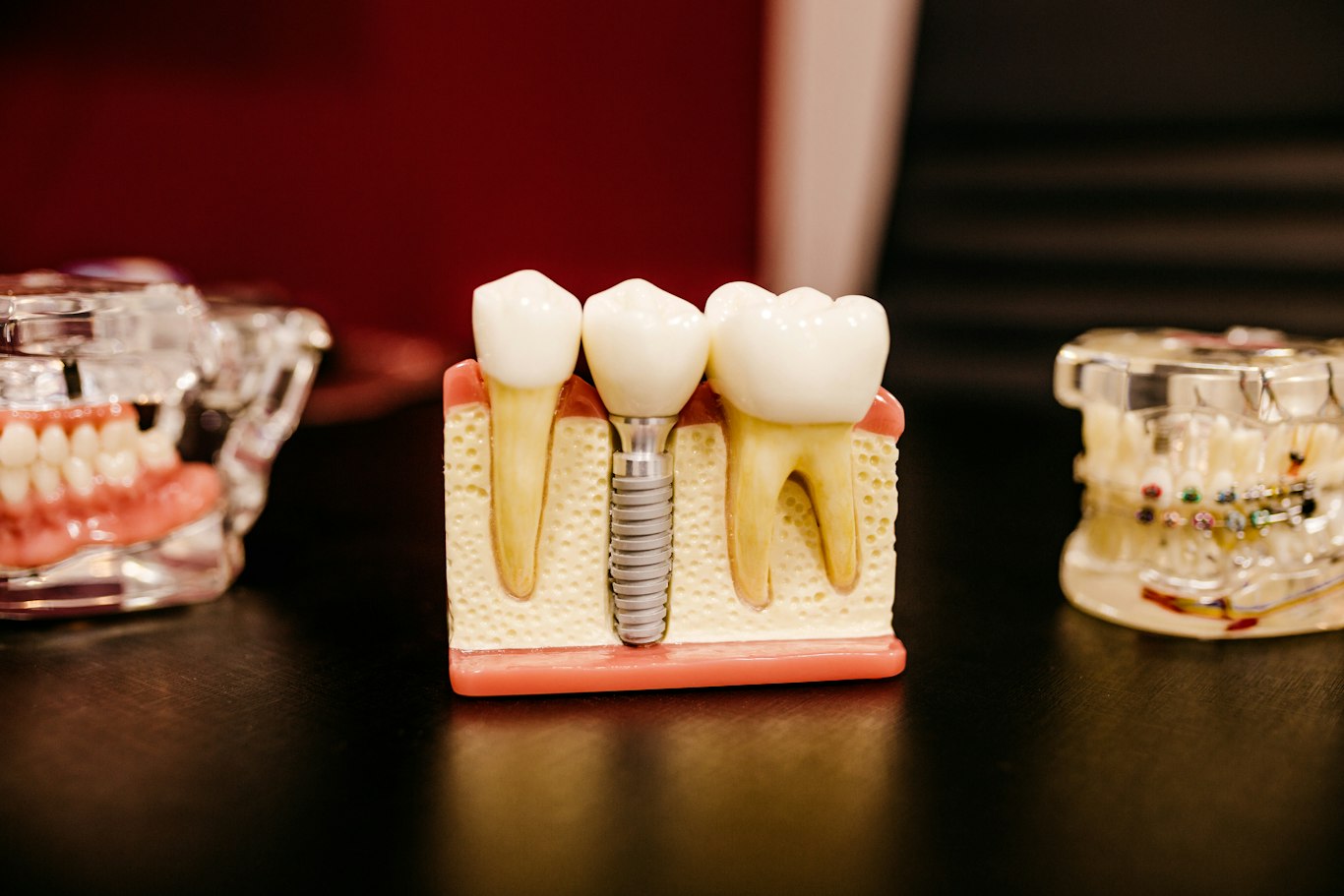
A dental implant is a small titanium post that your dentist places in the jawbone, where it acts like a tooth root. After it heals and fuses with the bone, your dentist attaches a crown, bridge, or denture on top.
Pros of dental implants:
- Look, feel, and function most like natural teeth
- Stable, so there is no slipping
- Help preserve jawbone
- Can last many years, often decades, with good care
- Do not require grinding down neighboring teeth
Cons of dental implants:
- Higher upfront cost
- Require minor surgery and a healing period of several months
- Need enough healthy bone, or a bone graft first
Implant-Supported Dentures: The Best of Both
If you are missing all your teeth, implant-supported dentures may be a great middle ground. In this approach, a few implants anchor a denture firmly in place, improving stability and chewing power without replacing every tooth individually.
How to Choose
- Budget: Dentures cost less upfront. Implants cost more but may need fewer replacements over time.
- Bone health: Implants need enough jawbone. Dentures do not.
- Overall health: Uncontrolled diabetes and smoking can affect implant healing. Read more about dental implants for smokers.
- Lifestyle: If stability and a natural feel are top priorities, implants are usually the better fit.
- Timing: Dentures can be ready sooner. Implants take a few months from start to finish, though some patients qualify for implants right after extraction.
Don’t Wait to Replace Missing Teeth
In the end, whatever you choose, replacing missing teeth sooner helps protect your bite and bone. Learn more in 8 reasons you should never ignore a missing tooth.
For more trusted oral health information, visit the American Dental Association’s MouthHealthy site.
Frequently Asked Questions
Which lasts longer, dentures or implants?
Implants can last many years with good care. Dentures typically need relining or replacing every several years as the jaw changes.
Are dental implants painful?
The procedure is done with local anesthetic. Most people have mild soreness for a few days, similar to a tooth extraction.
Does insurance cover implants or dentures?
Coverage varies by plan. Our team can help you review your benefits and financing options.
Replace Missing Teeth in Muncie, Indiana
Still deciding between dentures vs. dental implants? Affinity Family Dental can evaluate your teeth, gums, and bone and walk you through your options. Visit our insurance and financing page or book a consultation today.